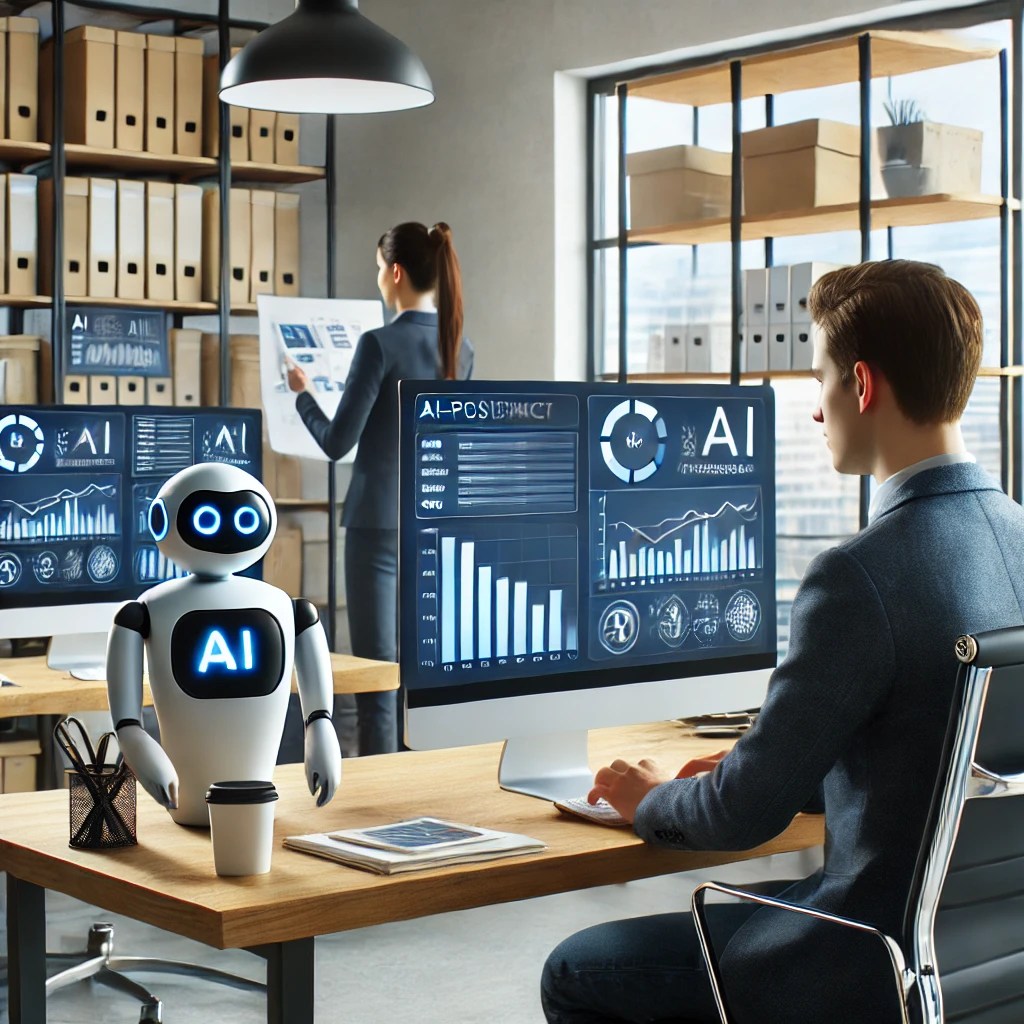
In today’s competitive landscape, small businesses need every advantage to stay ahead. Artificial Intelligence (AI) offers a unique opportunity to streamline operations, improve customer service, and make data-driven decisions that drive growth. While AI was once thought to be a tool only for large corporations, advancements in technology have made AI solutions more accessible and affordable for small businesses.
In this blog, we’ll explore AI solutions for small businesses, focusing on how they can improve various areas such as marketing, customer service, inventory management, and decision-making. We’ll also cover the best AI tools currently available and how to implement AI in your business strategy effectively.
What is AI, and How Can Small Businesses Benefit?
Artificial Intelligence refers to the development of systems capable of performing tasks that would normally require human intelligence, such as problem-solving, learning, and decision-making. AI can process and analyze vast amounts of data quickly, providing valuable insights and automation that help businesses operate more efficiently.
For small businesses, this means:
- Increased efficiency in daily operations.
- Better decision-making using data-driven insights.
- Cost savings through automation.
- Improved customer experiences with personalized interactions.
- Reduced errors in areas like accounting or inventory management.
Adopting AI is no longer optional if you want to stay competitive. Small businesses can harness AI in many ways to not only compete with larger firms but also increase productivity and customer satisfaction.
AI Solutions for Small Business Marketing
AI has revolutionized marketing by enabling small businesses to deliver personalized experiences at scale. It helps identify customer preferences, predict trends, and tailor content that resonates with audiences.
AI-Powered Customer Segmentation
Customer segmentation has always been crucial for marketing. AI can analyze large datasets and segment your audience based on behavior, preferences, and purchasing habits. This means you can create highly targeted marketing campaigns that speak directly to each customer segment, increasing engagement and conversion rates.
For example, AI can:
- Analyze customer data to create detailed profiles.
- Segment audiences based on behavior, such as purchase history or engagement with your brand.
- Predict customer preferences, allowing you to offer relevant products or services.
Personalized Marketing Campaigns
One of the biggest challenges for small businesses is creating personalized marketing at scale. AI tools can generate personalized email campaigns, social media ads, and website content based on customer behavior. This helps you engage with customers more effectively, ensuring that your marketing efforts are reaching the right people at the right time.
AI enables:
- Automated email marketing tailored to individual preferences.
- Personalized product recommendations on websites and in newsletters.
- Dynamic content creation for social media based on user behavior.
Predictive Analytics
Predictive analytics, powered by AI, uses historical data to forecast future trends. For small businesses, this can mean anticipating customer needs and adjusting marketing strategies accordingly. By analyzing patterns in consumer behavior, AI can help predict which products are likely to sell, when customers are most likely to buy, and how to optimize pricing strategies for maximum profitability.
AI Tools for Enhancing Customer Service
Customer service is the backbone of any small business. AI-powered tools can greatly enhance the customer service experience by providing instant support, resolving common issues, and ensuring that customers have the information they need.
AI-Powered Chatbots
Chatbots are one of the most effective AI tools for improving customer service. They can handle a wide range of customer queries, from answering basic questions to assisting with product selection or troubleshooting. By using AI chatbots, small businesses can provide 24/7 customer support without needing a large customer service team.
Benefits of AI chatbots include:
- Instant response times, reducing wait times for customers.
- Consistent support across multiple channels like websites and social media.
- Automated responses to frequently asked questions, freeing up staff for more complex tasks.
Voice Assistants for Customer Support
Voice assistants like Alexa and Google Assistant are becoming more common in customer service. Small businesses can leverage these tools to provide hands-free support to customers, enabling them to check order statuses, book appointments, or get product recommendations simply by using voice commands.
AI voice assistants offer:
- Convenience for customers who prefer hands-free interaction.
- Quick answers to common questions.
- Integration with other AI tools like CRM systems for personalized responses.
AI for Business Operations and Automation
Small businesses often face operational challenges, such as managing inventory, processing payments, or handling payroll. AI can automate many of these tasks, reducing errors and saving time.
Inventory Management with AI
Keeping track of inventory can be tedious and error-prone. AI-powered systems can automatically manage stock levels, track sales patterns, and predict when restocking is necessary. These tools can even recommend which products to prioritize based on demand forecasts, helping small businesses optimize their inventory and avoid overstocking or running out of popular items.
AI inventory management can:
- Track stock levels in real-time and alert you when restocking is needed.
- Analyze sales data to predict future demand.
- Optimize reordering schedules to reduce costs and avoid overstock.
AI-Powered Accounting Solutions
Accounting is another area where AI can make a significant impact. AI-powered accounting software automates tasks like invoicing, expense tracking, and financial reporting. This not only reduces the risk of human error but also ensures that financial data is accurate and up-to-date. AI can also assist in tax preparation and compliance, ensuring small businesses meet their financial obligations without the need for a dedicated accountant.
Benefits of AI in accounting include:
- Automated bookkeeping to streamline financial management.
- Real-time expense tracking, reducing errors.
- AI-generated financial reports for better decision-making.
Human Resource Management and AI
Managing employees is a time-consuming task for small business owners. AI tools can help streamline human resource management by automating tasks like payroll processing, performance evaluations, and employee scheduling. AI can also assist in the hiring process by screening resumes and identifying the best candidates for open positions.
AI in HR can:
- Automate payroll processing and benefits management.
- Provide insights into employee performance and productivity.
- Assist in recruiting by analyzing resumes and matching candidates to roles.
AI in Data Analytics and Decision Making
AI’s ability to process large amounts of data quickly makes it an invaluable tool for decision-making. Small businesses can use AI-powered analytics tools to make informed decisions about their marketing, sales, and operations.
AI for Business Intelligence
AI can analyze historical data to provide insights into business performance and identify areas for improvement. AI-powered business intelligence (BI) tools help small businesses uncover trends, identify patterns, and make more informed decisions. Whether it’s analyzing customer feedback or tracking key performance metrics, AI enables data-driven decision-making that can improve business outcomes.
Predictive Analytics for Sales and Revenue
Predictive analytics powered by AI can help small businesses forecast sales and revenue trends. By analyzing past sales data and external factors like market conditions, AI can predict future sales trends and revenue growth. This allows small businesses to adjust their strategies proactively, ensuring they stay ahead of the competition.
AI can:
- Predict sales trends based on historical data.
- Identify opportunities for revenue growth.
- Optimize pricing strategies using data-driven insights.
Best AI Tools for Small Businesses in 2024
Here are some of the best AI tools small businesses can use to streamline operations, enhance customer service, and improve decision-making:
- HubSpot – An AI-powered CRM for marketing, sales, and customer service automation.
- QuickBooks Online – AI-powered accounting software that automates bookkeeping and financial reporting.
- Tidio – A chatbot tool that offers AI-driven customer service for websites and e-commerce stores.
- Jasper AI – An AI writing assistant that helps create marketing content like blogs, ads, and emails.
- Zoho CRM – AI-powered customer relationship management software with built-in analytics.
- Xero – AI-powered accounting software designed to manage finances and automate payroll.
- Grammarly – An AI-based tool for writing assistance, perfect for crafting emails, reports, and marketing content.
How to Implement AI in Your Small Business
Implementing AI in your small business may seem daunting, but it doesn’t have to be. Here are a few steps to get started:
- Identify the problem you want AI to solve – Whether it’s improving customer service or automating operations, start with a clear objective.
- Choose the right tools – Research and select AI tools that fit your needs, budget, and technical capabilities.
- Start small – Implement AI solutions in one or two areas of your business to see how they work before scaling up.
- Train your staff – Ensure your team is trained on how to use AI tools effectively.
- Monitor performance – Continuously track the performance of AI tools and make adjustments as needed.
Conclusion
AI offers small businesses an opportunity to streamline operations, improve customer service, and make data-driven decisions. From marketing automation to customer service chatbots and inventory management, AI solutions can help small businesses stay competitive and grow in 2024. By starting small and selecting the right AI tools, even the smallest businesses can take advantage of the powerful capabilities of artificial intelligence.

 AI Chronicles
Leave a Reply